How Much Does It Cost to Feed a Dog per Month? Work It Out
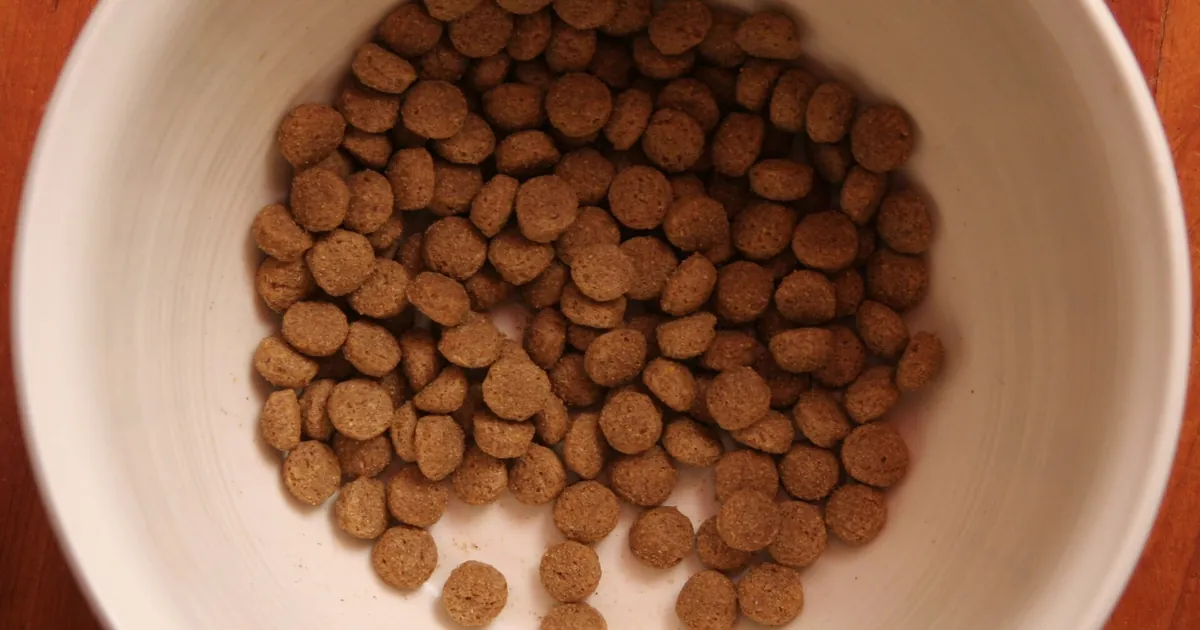
The cost of feeding a dog per month comes down to one simple idea: how long one bag lasts, and what that bag cost. Divide the bag price by the number of days it lasts to get a cost per day, then multiply by 30.4 for an average month. Every dog, food and store is different, so the only accurate answer uses your own numbers, and the dog food bag calculator does the whole sum from your label and your receipt.
What decides your dog’s food bill
Four things set the monthly cost:
- How much your dog needs to eat. This depends on its weight, whether it is spayed or neutered, how active it is and whether it is losing weight.
- How energy-dense the food is. A food with more calories per cup means fewer cups per day, so the bag lasts longer.
- The bag size and price. Larger bags often cost less per pound, but only if your dog finishes the bag while it is still fresh.
- Extras. Treats, toppers, wet food and chews all add to the bill.
The first two are why two bags with the same price and weight can cost very different amounts per month.
Step 1: Work out how much your dog eats a day
If you already feed a set number of cups and your dog is at a healthy weight, use that. If not, work it out from calories:
- Find your dog’s resting energy requirement (RER): RER = 70 × (weight in kg) raised to the power 0.75. To get kg, divide pounds by 2.2046.
- Multiply by the factor for your dog. Our calculators use 1.6 × RER for a spayed or neutered adult, 1.8 × RER for an intact adult and 1.4 × RER for an inactive dog or one that gains weight easily.
- Divide by the food’s kcal per cup from the label to get cups per day.
The dog food calculator does these three steps for you. For more on portion sizes, see how many cups of dog food per day. If your dog needs to lose weight, the target calories are different; read how many calories a dog should eat to lose weight, and check with your vet before cutting food.
Step 2: Work out how many cups are in the bag
US dog food labels must show calories per kg and per cup (or per can), under AAFCO’s labeling rules. Those two numbers tell you how much one cup weighs:
Grams per cup = (kcal per cup ÷ kcal per kg) × 1,000
Then:
Cups in the bag = bag weight in grams ÷ grams per cup
To get the bag weight in grams, multiply pounds by 453.6. This works because both calorie numbers describe the same food, so their ratio is the weight of one cup. It assumes a level, standard 8 fl oz measuring cup, not a heaped scoop.
Step 3: Work out how long the bag lasts
Days the bag lasts = cups in the bag ÷ (cups per day × number of dogs)
If two dogs share the bag, enter both in the calculator. If they eat different amounts, add their daily cups together.
Step 4: Turn it into a cost per month
Cost per day = bag price ÷ days the bag lasts
Cost per month = cost per day × 30.4
The calculator uses 30.4375 days, the average length of a month across a year, so the monthly figure doesn’t jump around between short and long months. For a yearly figure, multiply the cost per day by 365.
A quick checklist with your own numbers
Grab the bag and your receipt, then write down:
- The bag weight (lb)
- The kcal per cup and kcal per kg from the calorie statement
- The price you paid
- How many cups your dog eats a day
- How many dogs share the bag
Enter those five numbers in the dog food bag calculator and you’ll get the cups in the bag, how many days and weeks it lasts, and the cost per day and per month. Repeat it for any other food you’re thinking about to compare them fairly.
How to compare two foods fairly
The price on the shelf isn’t the real cost. Compare cost per day, not price per bag or price per pound:
- A food that costs more per pound but has more calories per cup can work out the same, or cheaper, per day.
- A food with fewer calories per cup means more cups a day, so the bag runs out sooner.
- Run both foods through the calculator with the same dog and the same daily calories, then compare the cost per day.
Ways to keep the cost under control
- Measure every meal with a real measuring cup, or better, weigh it once you know the grams per cup. Free-pouring is the easiest way to overfeed.
- Count treats. Vets suggest keeping treats under 10% of daily calories. Treats on top of full meals add cost and weight.
- Buy a bag size your dog will finish while it’s fresh. A big bag that goes stale is no saving. Keep kibble sealed in its original bag, inside an airtight container if you like.
- Keep your dog at a healthy weight. An overweight dog eats more food and is more likely to need vet care.
- Change foods slowly if you switch to save money, over several days, to avoid an upset stomach.
Food is only part of the cost
Food is one line in a dog’s budget. Vet care, prevention, insurance, grooming and supplies all add up. The cost of owning a dog calculator lets you put in your own prices for each part.
Frequently asked questions
How do I calculate the cost of dog food per day?
Divide the bag price by the number of days the bag lasts. To find the days, work out the cups in the bag from the label’s calorie numbers, then divide by the cups your dog eats a day. The dog food bag calculator does all of this from your label.
Why does a cheaper bag sometimes cost more per month?
Because it may have fewer calories per cup. Your dog then needs more cups a day to get the same energy, so the bag runs out sooner. Comparing cost per day, not price per bag, shows the real difference.
Do I need the calorie numbers from the bag?
They make the answer accurate, because they tell you how much one cup weighs and how long the bag will last. US labels show them in the calorie statement. If you can’t find them, the maker’s website usually lists them.
Does feeding two dogs double the cost?
Only if they eat the same amount. Add up the cups each dog eats per day and use that total. A small dog and a large dog sharing a bag will cost much less than two large dogs.
Should I feed less to save money?
Not without a plan. Feeding too little can leave your dog hungry or short on nutrients. If your dog is overweight, cutting calories is good for its health, but do it with your vet so the target is right.