How Much Water Should a Dog Drink a Day?
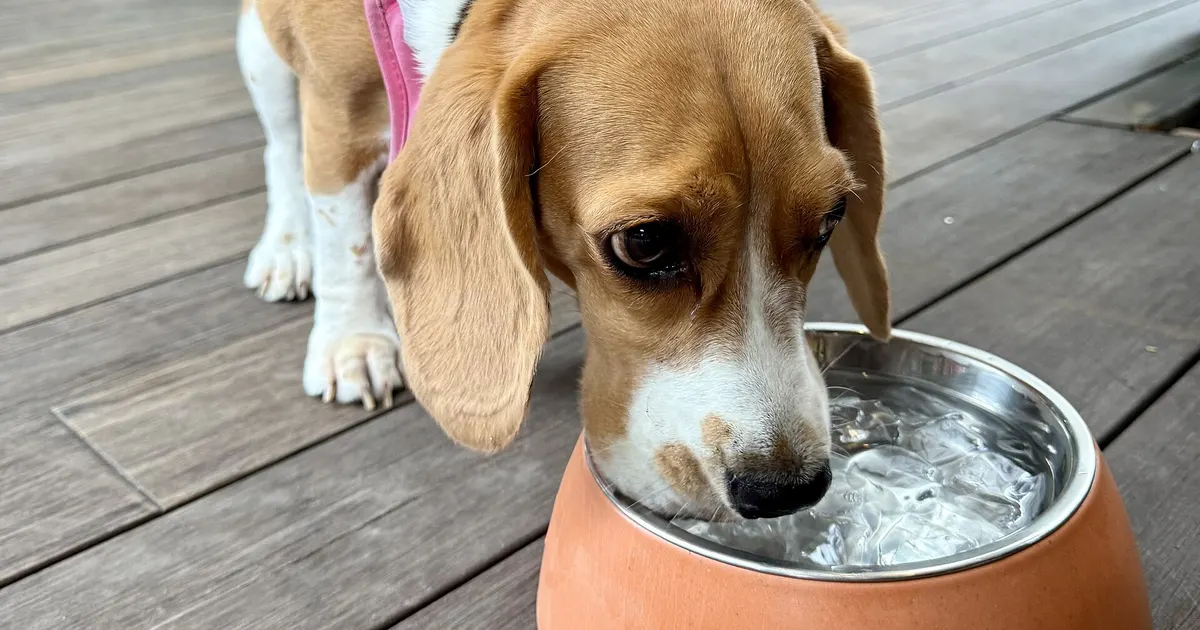
How much water a dog needs depends mainly on its body weight. A UK veterinary referral fact sheet on increased drinking gives a usual range of 20 to 70 ml of water per kg of body weight per day, and vets treat more than 100 ml per kg in 24 hours as drinking too much. Heat, exercise and dry food all push a dog toward the top of its range.
Our dog water intake calculator turns that into fluid ounces, milliliters and cups for your dog’s weight, and checks an amount you have measured. Use it as a guide, not a diagnosis. If your dog’s drinking has changed, check with your vet.
The formula vets use
These are the figures our calculator is built on:
- Usual daily range = 20 to 70 ml × body weight in kg
- Too much (polydipsia) = more than 100 ml × body weight in kg in 24 hours
The 20 to 70 ml per kg range comes from a UK veterinary referral practice’s fact sheet on polydipsia. The 100 ml per kg line is the standard definition of polydipsia used by vets (VIN, “Approach to Polyuria and Polydipsia in the Dog”).
Converting to US units
| From | To | Multiply by |
|---|---|---|
| pounds (lb) | kilograms (kg) | 0.4536 |
| milliliters (ml) | US fluid ounces (fl oz) | 0.0338 |
| US fluid ounces (fl oz) | cups | 0.125 (8 fl oz = 1 cup) |
So to work it out by hand: convert your dog’s weight to kg, multiply by 20 and by 70 to get the range in ml, then divide by 29.57 for fluid ounces. The calculator does all of this for you.
What about “1 ounce per pound”?
You will often see the rule of thumb “one fluid ounce of water per pound of body weight a day”. It works out at about 65 ml per kg, so it sits near the top of the usual range. It is fine as a quick check, but many healthy dogs drink less than that, especially dogs on wet food.
What changes how much a dog drinks
A dog’s water needs move around from day to day. Common reasons for a change:
- Food. Wet food is mostly water, so dogs eating it drink less from the bowl. Dogs on dry kibble drink more.
- Weather. Hot days mean more drinking.
- Exercise. Active dogs and working dogs need more.
- Salty treats or chews. These can make a dog drink more for a short time.
- Nursing. A mother feeding puppies needs a lot more water.
- Illness and medication. Some medicines and many illnesses change thirst.
A one-off increase after a long walk on a hot day is normal. A steady change over days or weeks is what to watch.
How to measure your dog’s water intake
Measuring for 24 hours gives you a real number to compare with the range, and a far more useful one to give your vet than “drinking a lot”.
- Pick a normal day, not one with a big hike or a heat wave.
- Fill the bowl with a measured amount, using a measuring jug in fluid ounces or ml. Write it down.
- Top up with measured amounts through the day and note each one.
- Include every source: all bowls in the house and yard, and any water given on walks.
- After 24 hours, measure what is left in each bowl.
- Subtract what is left from the total you put out. That is your dog’s intake.
- Enter the amount in the calculator, which shows it per kg and whether it is within the usual range, above it, or over 100 ml per kg.
If you have more than one pet sharing a bowl, give the dog you are measuring its own bowl for the day.
Signs your dog is drinking too much
Call your vet if you notice:
- drinking that has clearly increased and stays high for more than a day or two
- emptying the bowl much more often than before
- more urination, accidents in the house, or needing to go out at night
- weight loss, a change in appetite, or tiredness alongside the extra drinking
Drinking more than 100 ml per kg a day is called polydipsia. It can be a sign of diabetes, kidney disease, Cushing’s disease or an infection, so it needs a vet check, ideally with your 24-hour measurement and a fresh urine sample if your vet asks for one.
Signs your dog is not drinking enough
Dogs can lose water fast, especially with vomiting, diarrhea or hot weather. Watch for:
- dry, sticky gums
- tiredness or weakness
- sunken-looking eyes
- dark yellow urine, or urinating much less
- skin that is slow to settle back after a gentle pinch at the scruff
Call your vet promptly if you see these, or if your dog refuses water. A dog with diarrhea is a common case: our chicken and rice calculator covers the bland-diet side, and it is worth keeping a close eye on water at the same time.
Tips for keeping your dog hydrated
- Fresh, clean water all the time. Wash the bowl daily.
- More than one bowl in a large home or yard.
- Carry water on walks, especially in warm weather.
- Know your dog’s normal. Measure once when your dog is well so you have a baseline.
- Count the food. If you switch from wet to dry food, expect your dog to drink more. Our guide to how many cups of dog food per day helps with the food side of that switch.
Frequently asked questions
How much water should a dog drink a day?
Usually about 20 to 70 ml per kg of body weight a day, according to a UK veterinary referral fact sheet on increased drinking. Enter your dog’s weight in the dog water intake calculator to see that range in fluid ounces, milliliters and cups. Check with your vet if your dog’s drinking changes.
How much water is too much for a dog?
Vets define drinking more than 100 ml per kg of body weight in 24 hours as polydipsia. It can be a sign of diabetes, kidney disease, Cushing’s disease or infection, so measure your dog’s intake for a day and book a vet visit if it is over that line.
Is it normal for my dog to drink more in summer?
Yes. Heat and exercise both raise a dog’s water needs, so a dog may drink more on hot or active days. What is not normal is a steady increase that continues on cooler, quieter days, especially with more urination.
Why is my dog not drinking water?
Dogs on wet food drink less from the bowl, and some drink less when it is cold. But a dog that refuses water, or shows dry gums, tiredness or dark urine, may be dehydrated or unwell. Call your vet, especially if there is vomiting or diarrhea.
Do dogs on wet food need less water?
Yes. Wet food contains a lot of water, so dogs eating it usually drink less from the bowl. That is normal, as long as your dog still drinks when it needs to and shows no signs of dehydration.