How to Measure Your Dog for a Harness (Step by Step)
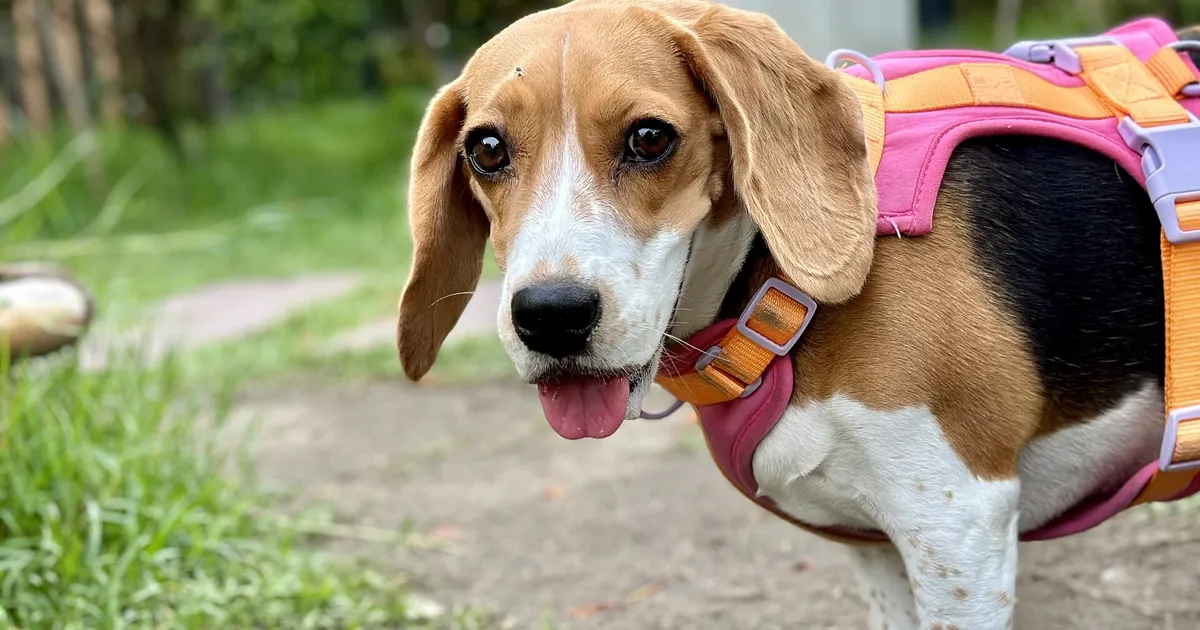
To measure your dog for a harness, wrap a soft tape measure around the widest part of the chest, just behind the front legs. That measurement is the chest girth, and it is what almost every harness size chart is based on. Many brands also ask for the neck, so measure that too, then match both to the maker’s chart. The dog collar and harness size calculator takes both numbers and gives you a harness size and a collar size in one go.
What you need
- A soft tape measure, the cloth or plastic kind used for sewing
- No soft tape? A piece of string or a phone charging cable and a ruler or hard tape measure
- A few treats and, ideally, a second person to keep your dog still
- Something to write the numbers on
Measure on a calm day, not right after a walk or when your dog is excited and wriggling.
Step 1: Measure the chest girth
- Stand your dog on all four feet on a flat floor. Sitting or lying down changes the shape of the chest.
- Find the widest part of the ribcage. It sits just behind the front legs, where the chest is deepest.
- Wrap the tape all the way around at that point, over the top of the back and under the chest.
- Keep the tape flat and snug, not tight. It should sit against the body, through the coat, without pressing in.
- Read the number where the tape meets its start, in inches.
- Measure twice. If the two readings differ, measure a third time and use the number that comes up most.
If you’re using string, pinch it where it meets, lay it along a ruler and read it there.
Fluffy or long-coated dogs
Press the tape gently through the coat so it sits on the body, not on top of the fur. A thick winter coat can add a surprising amount. If your dog is clipped short in summer and fluffy in winter, re-measure when the coat changes.
Step 2: Measure the neck
Many harnesses have a strap that goes around the base of the neck, so brands often list a neck range as well.
- Find the base of the neck, where it meets the shoulders. This is lower than where a collar sits.
- Wrap the tape around at that point, snug but not tight.
- Write it down next to the chest girth.
For a collar, measure higher up, where the collar actually sits. The calculator uses that collar measurement and adds 2 inches, or 1 inch for toy dogs under 10 lb, so two fingers fit underneath.
Step 3: Match the numbers to a size chart
Every brand sizes its harnesses a little differently, so the maker’s own chart always wins. The calculator uses Ruffwear’s published Front Range chart, one widely sold harness, because it is clearly laid out by chest girth:
| Chest girth | Ruffwear Front Range size |
|---|---|
| 13–17 in (33–43 cm) | XXS |
| 17–22 in (43–56 cm) | XS |
| 22–27 in (56–69 cm) | S |
| 27–32 in (69–81 cm) | M |
| 32–42 in (81–107 cm) | L/XL |
Under 13 inches, the calculator suggests looking at a toy-size harness; over 42 inches, an XXL from a brand that makes one.
When your dog is between sizes
If your measurement lands right on a line, such as exactly 17 or 22 inches, the calculator shows both sizes. Then:
- For a growing puppy, pick the larger size and tighten the straps. Ruffwear gives the same advice.
- For an adult dog, check whether the neck measurement fits the smaller size too. If it does, the smaller size is often the snugger, more secure fit. If you’re unsure, look for the brand’s advice or a harness with a wider adjustment range.
Step 4: Check the fit at home
Once the harness arrives, put it on and adjust every strap before the first walk.
- The two-finger check: you should be able to slide two fingers flat under every strap, and no more.
- No rubbing behind the front legs. The strap that runs under the chest should sit well behind the armpits.
- No slipping. Lift gently on the back handle or ring. The harness should stay in place, not slide forward over the shoulders.
- Free shoulders. Watch your dog walk. The straps shouldn’t cross the front of the shoulders in a way that stops a full stride.
- Check it again after a walk. Look for red patches, rubbed fur or a dog who keeps trying to scratch at the harness.
Common mistakes
- Sizing by weight. Two dogs of the same weight can have very different chests. A deep-chested dog often needs a larger size than its weight suggests.
- Measuring too far back on the belly instead of the widest part of the ribcage.
- Pulling the tape tight to get a “neat” number.
- Using one brand’s chart for another brand. A medium in one brand can be a small in the next.
- Not re-measuring puppies. They can outgrow a harness in weeks; see how big your puppy will get for a sense of how much growing is left.
Tips
- Write the numbers in your phone so you have them when shopping.
- Measure for the crate at the same time. The dog crate size calculator uses your dog’s length and height; our guide to what size crate for a 50 lb dog shows how.
- Use the calculator for both collar and harness. Enter the neck and chest numbers in the dog collar and harness size calculator and compare the result with the brand’s chart before you buy.
Frequently asked questions
Where exactly do I measure my dog’s chest for a harness?
Around the widest part of the ribcage, just behind the front legs, with your dog standing. The tape goes over the back and under the chest, snug against the body but not tight.
Should I measure over the fur?
Measure through the fur, not on top of it. Press the tape gently so it sits against the body. On very fluffy dogs, the difference between measuring on top of the coat and through it can be enough to change the size.
Can I use my dog’s weight to pick a harness size?
Only as a rough first guess. Weight doesn’t tell you the shape of the chest, so measure the chest girth and use that with the maker’s chart. Many brands print weight ranges, but most say to go by the measurement when the two disagree.
How tight should a dog harness be?
Snug enough that it can’t slip off over the head or shoulders, loose enough to fit two fingers flat under each strap. If your dog can back out of it, it’s too loose; if it leaves marks or rubs, it’s too tight or the wrong shape.
How often should I re-measure my dog?
Re-measure puppies every few weeks while they grow. For adult dogs, re-measure after a big change in weight or coat, or if the harness starts to rub or slip.